IPL (Intense Pulsed Light) is one of the most validated hair reduction technologies in aesthetics. It's also one of the most misrepresented — both by brands overpromising results and by skeptics dismissing it entirely. Here's the straight version.
How it actually works
IPL devices emit a broad-spectrum pulse of light that targets melanin — the pigment in hair follicles. The light energy is absorbed by the melanin, converted to heat, and that heat disrupts the follicle's ability to grow hair. Over multiple treatments, the follicle weakens and hair regrowth becomes thinner, slower, and eventually minimal.
This is the same mechanism used in professional laser hair removal clinics — though professional lasers typically use a single, precise wavelength, while IPL uses a broader spectrum. Both work. Clinical lasers generally work faster and more precisely; home IPL devices compensate with accessibility and frequency.
Who it works best for
IPL is most effective when there's good contrast between hair pigment and skin tone. The light needs to target the hair without being absorbed by the surrounding skin.
Best results: light to medium skin tones (Fitzpatrick I–III) with dark brown or black hair. This is the combination most studies on IPL efficacy are conducted with, and the results are well-documented: 70–90% hair reduction after 8–12 treatments.
Moderate results: medium skin tones (Fitzpatrick IV) with dark hair. More treatments typically needed; start at lower intensity settings.
Limited results: very dark skin tones (Fitzpatrick V–VI), where the risk of the light being absorbed by skin rather than hair follicle increases. Also: very light, blonde, gray, or red hair, where there isn't enough melanin for the light to target.
If you're unsure where you fall, the Fitzpatrick scale is widely available online. When in doubt, email us — we'll tell you honestly whether IPL is likely to work for you.
What to expect, week by week
Week 1–2: You may notice some treated hairs falling out. This is normal — the follicle releasing the damaged hair shaft. Not all hairs will respond immediately, as hair grows in cycles.
Week 3–4: Regrowth begins to slow in treated areas. You'll likely still need to shave or wax, but less frequently.
Week 6–8: Noticeable reduction in hair density and regrowth speed for most users. Hairs that do grow back are often finer.
Week 10–12: Significant and visible hair reduction in treated areas for most light-medium skin tones with dark hair. Some areas (like the underarms) respond faster than others (like the legs or bikini area).
Maintenance: Most people need 1–2 touch-up sessions per month after the initial cycle to maintain results, since new follicles occasionally activate.
Safety notes that matter
Never use IPL on tattooed skin — the pigment in tattoos absorbs light intensely and can cause burns. Avoid active moles, raised birthmarks, and dark spots. Always wear the included eye protection. Avoid sun exposure 48 hours before and after treatment. Do not use on recently tanned skin.
For most people using a quality device correctly, IPL is safe and produces real results. The key words are correctly and consistently.
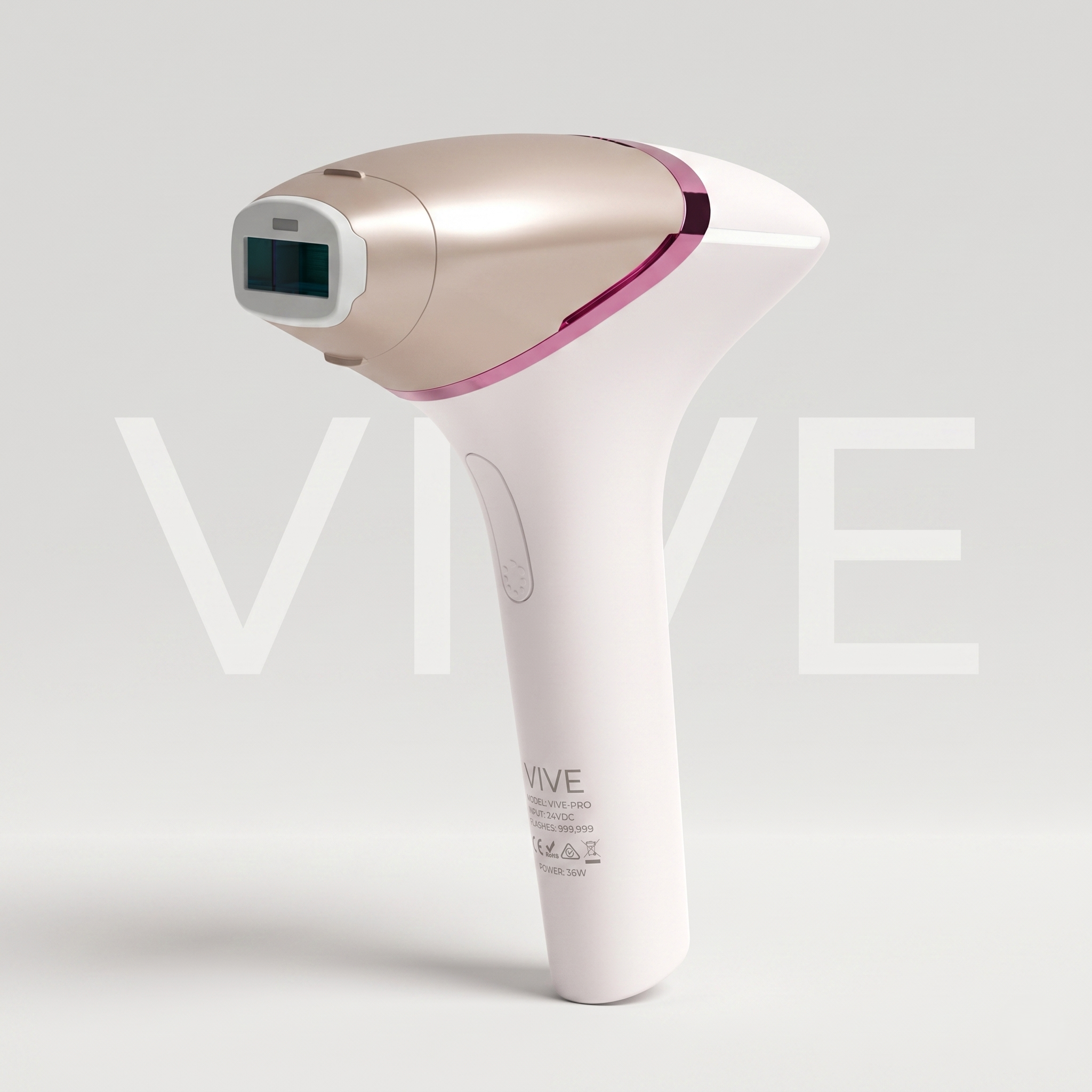
The Vive IPL device has 500,000+ flashes — enough for years of full-body treatments at $129.99 with a 60-day money-back guarantee — learn more here.