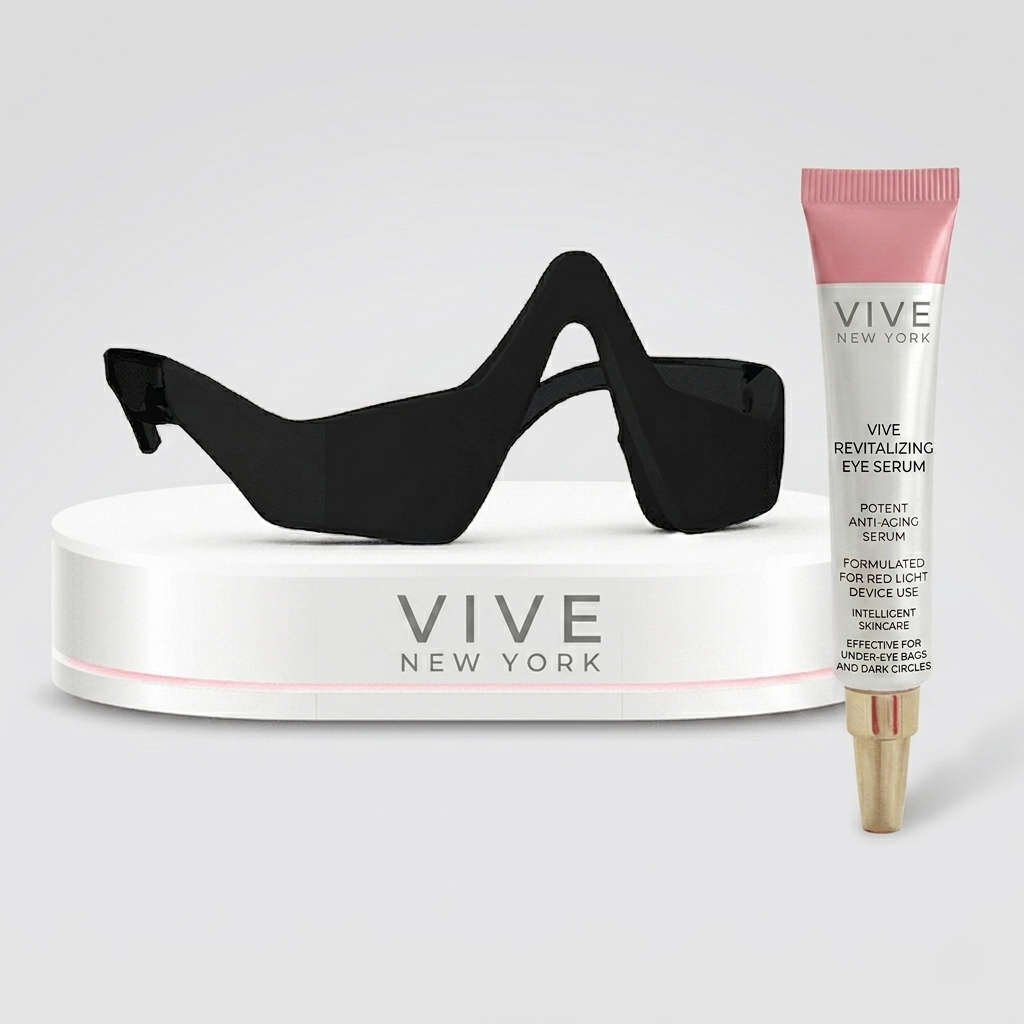
The under-eye area is one of the most marketed regions in skincare — and one of the most misunderstood. Here's why most eye creams produce modest results, and what the research actually supports for reducing puffiness and dark circles.
Why creams can only do so much
The skin under your eyes is the thinnest on your face — approximately 0.5mm, compared to 2mm on the rest of the face. It has fewer oil glands, less collagen, and less structural support. This thinness is precisely what makes this area the first to show signs of aging, fatigue, and fluid retention.
The challenge with topical creams is delivery. Most active ingredients — peptides, retinol, vitamin C — are too large to penetrate beyond the epidermis (the outermost skin layer). The tissue causing puffiness and dark circles typically lives deeper, in the dermis or beneath it. Creams moisturize and support the surface, but they don't reach the underlying cause.
What actually causes under-eye puffiness
Puffiness under the eyes is usually fluid retention — lymphatic fluid that accumulates in the tissue overnight (gravity-dependent) or due to poor circulation. The lymphatic system is a slow-moving network that requires movement and stimulation to drain effectively. When it's sluggish, fluid pools in areas of least resistance — and the thin under-eye skin shows it immediately.
Dark circles have multiple causes: poor circulation (bluish discoloration from blood pooling), thin skin showing the underlying blood vessels (genetic), hyperpigmentation (common in darker skin tones), and hollowing from volume loss (structural).
What the research supports
EMS (Electrical Muscle Stimulation) sends low-level electrical impulses that stimulate muscles and improve circulation in the treated area. Applied specifically to the under-eye area, it helps drain stagnant lymphatic fluid — reducing puffiness more directly than any topical approach.
Red light therapy (630nm) penetrates the dermis to support collagen production, reduce inflammation, and accelerate cellular repair. Multiple studies show it visibly improves fine lines and skin texture with consistent use over 4–8 weeks.
Caffeine in topical formulas does constrict blood vessels temporarily, which is why it shows up in well-formulated eye creams. It's the one topical ingredient with reasonable evidence for mild, temporary dark circle reduction caused by poor circulation.
The most effective protocol
For puffiness: combine a caffeine-based eye cream with EMS treatment in the morning. The cream supports surface-level vessel constriction; the EMS activates lymphatic drainage at a deeper level. Most people see noticeable morning puffiness reduction within 1–2 weeks.
For dark circles from circulation: the same protocol, used consistently. Results take 4–6 weeks because you're improving underlying blood flow, not just masking the surface.
For dark circles from pigmentation or hollowing: these require different approaches (brightening ingredients for pigmentation; filler or structural treatment for hollowing). No device addresses these effectively.
The Vive Eye Device combines red light therapy and EMS specifically for the under-eye area — learn more here.